
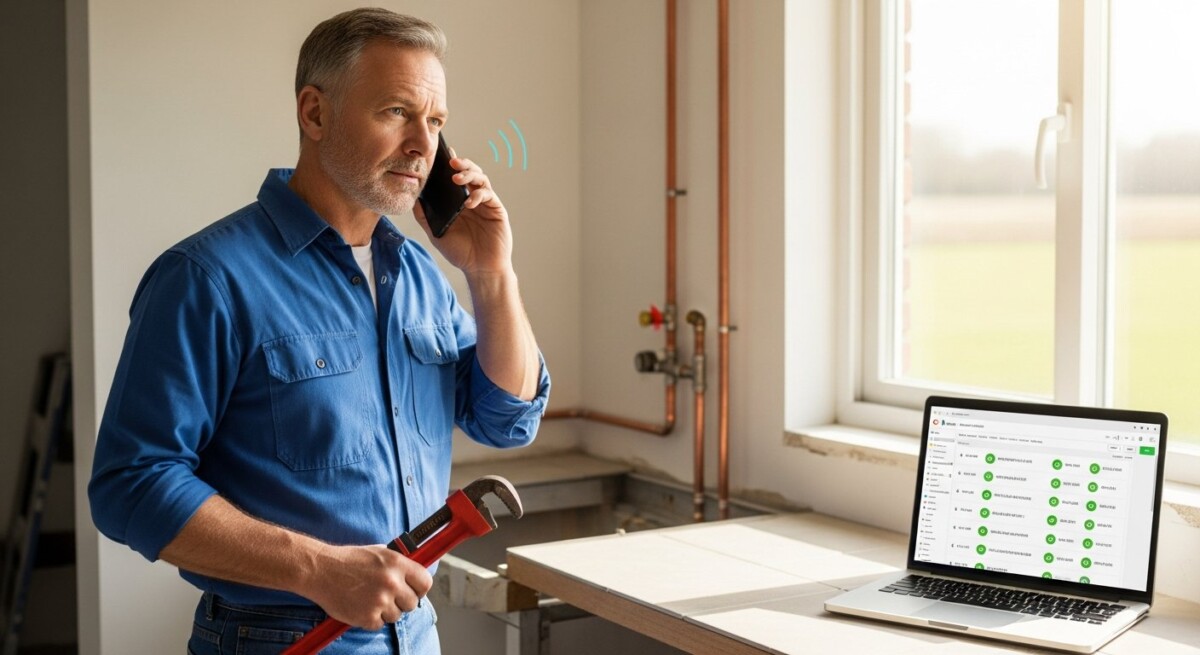
How Pay Per Call Services Boost Lead Quality
Marketing teams chase every channel for revenue, yet many waste budget on clicks that never convert. Phone calls offer a different reality: a live conversation signals genuine intent. Pay per call services solve this disconnect by tying ad spend directly to inbound phone leads. Instead of paying for impressions or clicks that may fizzle, advertisers pay only when a prospect picks up the phone. This model forces both the advertiser and the publisher to care about lead quality. For service-based businesses like plumbers, lawyers, or insurance agents, that shift can double conversion rates and eliminate wasted spend. The following sections explain how this model works, why it outperforms traditional digital advertising, and how you can implement it to maximize your return.
What Are Pay Per Call Services and How Do They Work?
Pay per call services are a performance-based advertising model in which an advertiser pays a publisher or affiliate network only when a consumer places a qualified phone call to a designated number. Unlike cost-per-click (CPC) or cost-per-impression (CPM) models, the payout is triggered by a real human interaction. This aligns incentives: publishers must drive motivated traffic, and advertisers receive a warm lead rather than a passive page view.
The mechanics involve call tracking technology. A unique phone number is assigned to each campaign or publisher. When a consumer sees that number (on a website, a search ad, or a billboard) and dials it, the call is forwarded to the advertiser’s main business line. The platform records the call duration, source, and often the caller’s geographic location. Advertisers define what constitutes a valid call: a minimum duration (e.g., 60 seconds), a specific time of day, or a verified caller. Payments are processed only for calls that meet those criteria. This structure eliminates the risk of paying for accidental dials or hang-ups.
For a deeper look at how this model drives measurable outcomes, see our analysis on how pay per call services drive measurable ROI. That piece breaks down the attribution methods and ROI calculations that make this channel uniquely trackable.
Why Lead Quality Is Higher with Pay Per Call
The biggest pain point in digital advertising is lead quality. Click-based campaigns often deliver tire-kickers or bots. Pay per call services change the dynamic because a phone call is a high-commitment action. The consumer must stop what they are doing, dial a number, and speak to a human. That friction filters out casual browsers and leaves only serious buyers.
Intent Signals That Clicks Cannot Match
When someone calls a business, they are usually ready to buy, book, or ask a specific question. That intent is far stronger than a click on a banner ad. For example, a roofing contractor who pays per call receives calls from homeowners with a leaking roof, not from someone who clicked a blog post about roof maintenance. The conversation starts with a problem that needs immediate solving. That reduces the sales cycle and increases close rates.
Built-In Qualification through Conversation
The call itself becomes a qualification step. The advertiser can ask questions about budget, timeline, and location during the first minute. If the lead does not fit, the call ends quickly without further cost. Compare that to a web form where the advertiser pays for every submission, regardless of quality. With pay per call services, the advertiser can set rules like “minimum 2-minute call” or “call must occur during business hours” to ensure only serious prospects trigger a charge.
Publishers also have an incentive to send only relevant traffic. If they send poor leads that hang up quickly, the advertiser can reject the call, and the publisher earns nothing. This self-policing mechanism keeps the entire ecosystem focused on quality. Our research on how pay per call services boost lead quality shows that advertisers using this model see up to 40% higher conversion rates compared to click-based campaigns.
Key Components of a Pay Per Call Campaign
Launching a successful campaign requires more than setting up a phone number. The following components must work together to ensure both parties benefit:
- Call Tracking and Dynamic Number Insertion: This technology assigns a unique number to each traffic source. It allows you to see which publisher, keyword, or ad creative generated the call. Without this, you cannot attribute performance or optimize spend.
- Call Filtering and Validation Rules: Define what counts as a qualified call. Common filters include minimum call duration (e.g., 30 seconds), geographic area codes, and time-of-day restrictions. This prevents paying for wrong numbers or short hang-ups.
- Fraud Prevention: Sophisticated networks use algorithms to detect repeat callers, high hang-up rates, and number spoofing. Fraud protection is essential to maintain trust between advertisers and publishers.
- Creative Assets and Landing Pages: Publishers need ads that drive calls. Offer them a library of banners, text ads, and call-to-action buttons that clearly communicate the value of picking up the phone.
Each component feeds into the reporting dashboard. Advertisers can see cost per call, conversion rate, and revenue generated per call. That data allows continuous optimization: pausing underperforming publishers, adjusting bid prices, or testing new ad copy. Publishers can see which offers convert best and focus their traffic accordingly.
Comparing Pay Per Call to Other Lead Generation Models
To understand the value of pay per call services, compare them directly to common alternatives. The table below summarizes the key differences:
Cost-Per-Click (CPC): You pay for every click, regardless of whether the visitor converts. A click may come from a bot, a competitor, or a casual researcher. There is no guarantee of a human conversation. Pay per call eliminates this waste by charging only for live calls.
Cost-Per-Lead (CPL): You pay for a completed form submission. While better than CPC, form submissions can be low-quality (fake emails, incomplete data). Phone calls provide immediate verbal qualification, which often leads to higher close rates.
Cost-Per-Action (CPA): You pay for a specific action like a sale or signup. CPA is the most performance-driven model, but it often requires a higher payout and complex tracking. Pay per call sits between CPL and CPA: it is closer to a qualified lead than a form fill, but not as expensive as a full CPA. It works well for services that need a conversation before a sale.
For businesses with high average order values (legal services, home services, healthcare), pay per call delivers the best balance of cost and quality. The advertiser avoids paying for unqualified traffic while still getting a warm lead that can be converted over the phone.
Steps to Launch a Pay Per Call Campaign
Implementing pay per call services follows a structured process. The steps below outline how to start:
- Define Your Target Call Profile: Decide who you want to call. Specify geographic area, time of day, call duration minimum, and the type of caller (e.g., homeowner vs. renter). This profile becomes the basis for filters and publisher guidelines.
- Set Up Call Tracking Infrastructure: Use a platform like PayPerCall Marketing to generate dynamic numbers, configure forwarding, and set validation rules. Test the flow by placing a test call from a different phone number.
- Create Publisher Offers: Write a clear offer description that tells publishers exactly what kind of calls you want and what you will pay. Include payout per call, any caps, and preferred traffic sources. Provide ad creatives that drive high-intent clicks to your call-enabled landing page.
- Recruit or Activate Publishers: If using a network, the platform will match you with vetted publishers. You can also work directly with affiliates who have access to targeted audiences (e.g., local blogs, comparison sites, or SEM affiliates).
- Monitor and Optimize: Review the dashboard daily. Look for publishers with high call volume but low conversion rates. Adjust your filters or payout rates. Test different call-to-action phrases like “Call Now for a Free Quote” vs. “Speak to a Specialist Today.”
Launching a campaign is simple, but optimization is where the real gains come. The platform’s reporting tools allow you to drill down by hour, source, and even keyword. Over time, you can increase payouts for high-converting publishers and cut low performers.
Common Mistakes to Avoid
Even with a strong model, pitfalls exist. Avoid these common errors to get the most from pay per call services:
- Setting Filters Too Loose: If you accept all calls regardless of duration or location, you will pay for accidental dials and wrong numbers. Be specific about what qualifies.
- Ignoring Call Recording: You cannot improve what you do not measure. Listen to calls to understand what questions prospects ask and how your team responds. Use that data to refine scripts and ad messaging.
- Neglecting Publisher Communication: Publishers need feedback. If they send good calls, tell them. If quality drops, explain the issue. A collaborative relationship improves results for both sides.
- Underpricing the Payout: Pay too little, and publishers will send traffic to higher-paying offers. Research what competitors pay for similar calls. A fair payout attracts better traffic.
Avoiding these mistakes ensures your campaign scales without burning budget. The pay per call model is resilient, but it rewards attention to detail.
Frequently Asked Questions
What types of businesses benefit most from pay per call services?
Service-based businesses with high average order values benefit most. Examples include law firms, medical practices, HVAC contractors, insurance agencies, and financial advisors. These industries require a conversation to close a sale, making phone leads highly valuable.
How do publishers get paid in a pay per call model?
Publishers receive a predetermined payout for each qualified call they generate. The payment is triggered when the call meets the advertiser’s criteria (minimum duration, location, etc.). Payments are typically processed weekly or bi-weekly through the network platform.
Can pay per call services work for national campaigns?
Yes. The model works for both local and national campaigns. Advertisers can set up multiple numbers for different regions and use filters to route calls to local offices. National brands use pay per call to generate leads for franchise locations or regional service centers.
Is pay per call more expensive than pay per click?
The cost per call is usually higher than a click, but the conversion rate is significantly higher. The effective cost per acquisition (CPA) is often lower because you pay only for leads that have a high likelihood of converting. Run a side-by-side test to compare your specific market.
What technology do I need to start?
You need a pay per call platform that provides call tracking numbers, dynamic number insertion, call recording, and reporting. Many platforms also offer fraud detection and publisher management tools. No hardware is required; everything runs in the cloud.
For a step-by-step implementation guide, refer to our article on how pay per call services boost lead quality, which includes case studies from home service advertisers who doubled their lead-to-sale ratio.
Pay per call services represent a fundamental shift away from vanity metrics and toward measurable outcomes. By paying only for real conversations, advertisers eliminate waste, publishers earn fair compensation for quality traffic, and consumers reach a human who can solve their problem in minutes. The model is transparent, scalable, and proven across dozens of industries. If your marketing budget currently funds clicks that rarely convert, moving to a pay per call model could be the single highest-impact change you make this year. Start with a small test campaign, measure the results against your current channels, and let the data guide your next move.