
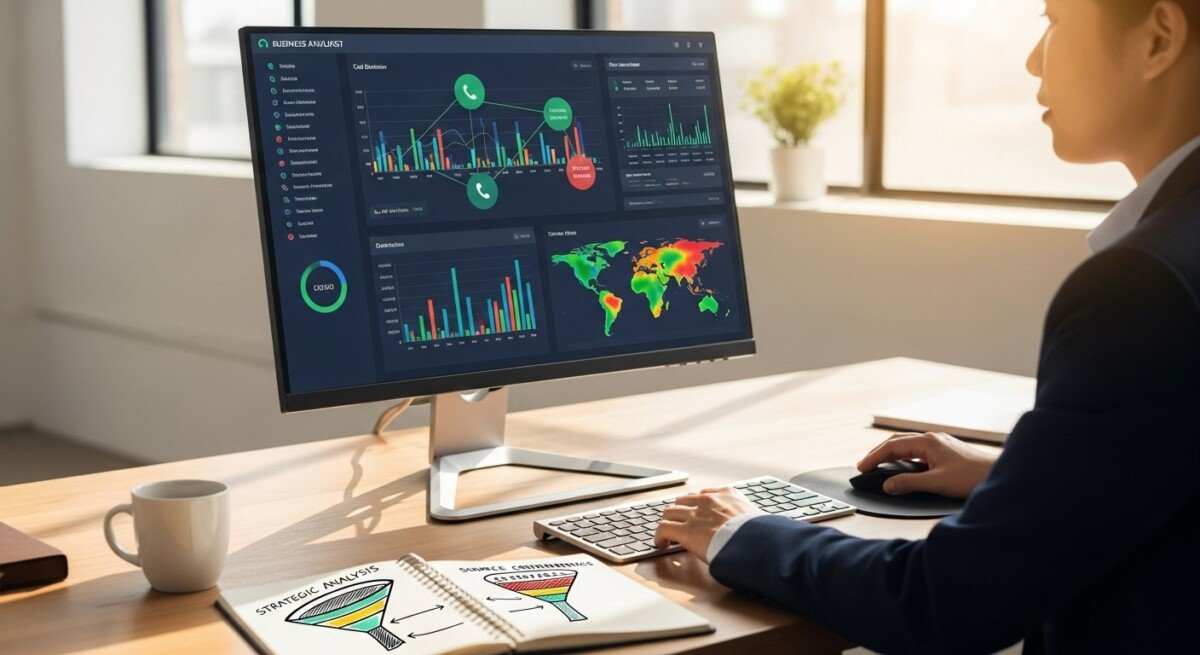
How to Measure and Optimize Call Campaign Analytics
Call campaign analytics unlock the true ROI of your marketing by tracking which calls convert to revenue. Move beyond simple call counts to optimize spending and boost sales.

By Anders Nightford
You are running call campaigns, pouring budget into ads and promotions, and the phone is ringing. But are those calls translating into revenue, or are they just noise? The difference between a profitable campaign and a money pit lies in your ability to move beyond simple call counts and dive deep into call campaign analytics. This discipline transforms raw call data into a strategic asset, revealing not just what is happening, but why, and what you should do next. It is the critical bridge between marketing activity and measurable business outcomes, allowing you to allocate budget with confidence and refine messaging for maximum impact.
The Core Metrics That Define Call Campaign Success
Effective call campaign analytics begins with a clear understanding of which metrics matter. Vanity metrics like total call volume can be misleading. True performance is measured through a hierarchy of data points that connect the call to business value. The first layer is call source attribution, which answers the fundamental question: where did this call come from? Using unique tracking numbers, dynamic number insertion, and UTM parameters, you can pinpoint whether a call originated from a Google Ads search, a social media post, a specific landing page, or even a particular email blast.
The next layer involves call quality and engagement. This moves past the “if” a call happened to assess “how” it happened. Key metrics here include call duration (short calls often indicate misdirected leads), time of day patterns, and geographic source. A call from a high-intent keyword that lasts 10 minutes is fundamentally different from a 20-second wrong-number call, even if your basic tracker logs them both as a “lead.” Integrating these analytics with your CRM is where the picture becomes complete. By tagging outcomes, such as “appointment set,” “quote provided,” or “sale closed,” you can calculate the only metric that ultimately matters: return on ad spend (ROAS).
To build a framework for analysis, focus on these five core metric categories:
- Volume & Source: Total calls, calls by channel, campaign, and keyword.
- Quality & Intent: Average call duration, hold time, and call recordings for sentiment.
- Conversion & Outcome: Lead conversion rate, qualified lead rate, and sales conversion rate.
- Cost & Efficiency: Cost per call, cost per lead, and cost per acquisition.
- Revenue & ROI: Revenue per call, total campaign revenue, and overall ROAS.
Mastering these metrics allows you to diagnose problems and identify opportunities. For instance, a campaign with a low cost per call but an abysmal sales conversion rate points to a targeting or offer mismatch. Conversely, a high cost per lead that converts to revenue at a premium rate justifies the investment. This analytical approach is foundational for implementing the pay per call campaign best practices for high-converting calls that focus on quality over quantity.
Implementing a Technical Framework for Call Tracking
Accurate analytics are impossible without a robust technical setup. The cornerstone of this system is a dedicated call tracking platform. These platforms provide the infrastructure to generate unique, trackable phone numbers for each marketing asset. When a prospect calls that number, the platform captures a wealth of data: the source of the call, the caller’s number (where legally permissible), the webpage they were on, the keyword they used, and the specific ad they clicked.
Dynamic Number Insertion (DNI) is a critical technology in this framework. DNI works by swapping a generic phone number on your website with a unique, trackable number in real-time based on the visitor’s source. This means a visitor from organic search sees one number, a visitor from a paid Facebook ad sees another, and a visitor from an email campaign sees a third. This granularity ensures 100% attribution accuracy, eliminating the guesswork of where your web-generated calls originate. Furthermore, integrating call tracking with your Google Analytics and Google Ads accounts closes the loop on offline conversions. You can upload call conversion data directly, allowing the platforms to optimize your bids not just for clicks, but for valuable phone calls.
The final, often underutilized, component is call recording and AI-powered speech analytics. Recording calls (with consent) provides an qualitative layer to your quantitative data. Modern speech analytics tools can transcribe calls and scan for keywords, competitor mentions, customer sentiment, and script adherence. This reveals why calls convert or fail, providing direct feedback for agent training and message refinement. This technical foundation is what enables marketers to build high-converting call campaigns that drive revenue from the ground up.
Transforming Analytics into Actionable Optimization
Data collection is only the first step. The real power of call campaign analytics is realized when you use insights to drive deliberate optimization. This is a continuous cycle of measurement, analysis, testing, and implementation. Start by conducting a regular audit of your performance data. Look for clear patterns: which keywords generate the longest calls? Which ad copy leads to the highest quality leads? What time of day yields the most appointments?
Use these insights to make strategic budget reallocations. Shift spend away from channels or keywords with high volume but low conversion rates and toward those that drive valuable conversations, even if their volume is lower. Optimize your landing pages and ad creative by A/B testing elements directly tied to call performance. Test different value propositions, call-to-action phrases, and even the placement and color of your click-to-call button. The goal is to reduce friction and increase intent before the call even happens.
Perhaps the most significant area for optimization is within the call itself. Analyzing call recordings and performance metrics by agent can uncover best practices and training gaps. You might discover that agents who follow a specific qualification framework have a 40% higher close rate. By standardizing this approach, you lift the performance of your entire team. Furthermore, use analytics to refine your targeting. If data shows that calls from a specific demographic or region have a higher lifetime value, you can adjust your audience targeting in social and search campaigns to attract more of those high-value prospects. This process of continuous refinement is the essence of learning how to maximize call campaign ROI with data and strategy.
Frequently Asked Questions on Call Campaign Analytics
What is the most important metric in call campaign analytics?
While cost per acquisition and ROAS are the ultimate financial metrics, the most important diagnostic metric is often sales conversion rate from calls. This directly measures the effectiveness of your targeting, offer, and sales process. A high call volume with a low conversion rate indicates a fundamental mismatch that must be addressed.
How do I attribute a sale to a call campaign if the close happens later?
This requires CRM integration. The call tracking platform should log the initial lead source. Your sales team then updates the lead’s status in the CRM as it moves through the pipeline to “closed-won.” By linking these systems, you can run reports that tie final revenue back to the original call source, enabling true ROI calculation.
Is call recording legal for analytics?
Laws vary by state and country. In many jurisdictions, you must inform the caller that the call is being recorded for quality assurance purposes, often via an automated message at the beginning of the call. It is crucial to consult legal counsel to ensure your call recording practices comply with all applicable laws, such as two-party consent laws in certain states.
Can I use call analytics for offline advertising like TV or billboards?
Yes, through the use of dedicated tracking numbers. Assign a unique phone number to each offline medium (e.g., one for TV ad A, one for Billboards in Region B). All calls to that number are then attributed to that specific source in your analytics dashboard, allowing you to measure the direct response of offline channels.
What is a good benchmark for call conversion rate?
There is no universal benchmark, as rates vary wildly by industry, offer complexity, and price point. A legal firm seeking case consultations will have a different rate than a pizza delivery service. The key is to establish your own baseline and focus on improving it over time through continuous optimization based on your call campaign analytics.
Mastering call campaign analytics is not a one-time project but an ongoing commitment to data-driven decision-making. By implementing a robust tracking framework, focusing on the metrics that tie to revenue, and relentlessly optimizing based on insights, you transform your call channel from a cost center into a predictable, scalable growth engine. The calls will keep coming. Your analytics will ensure they are the right ones.