
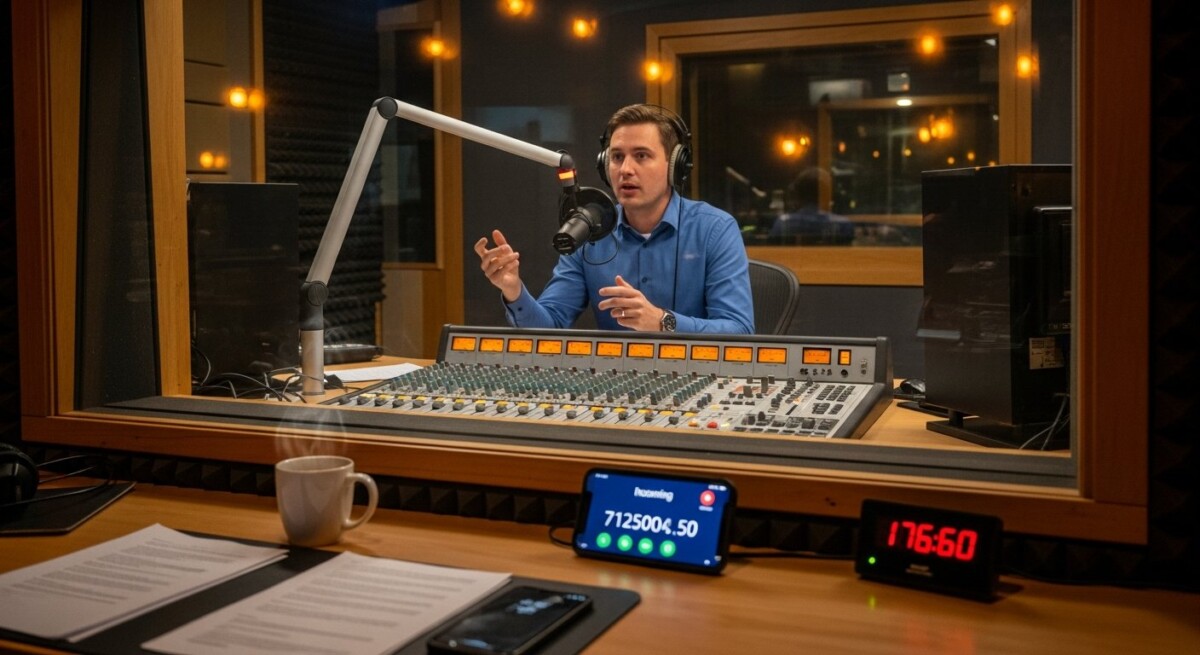
Pay Per Call Radio Advertising: A Smart Marketing Strategy
Radio advertising has long been a staple for local businesses seeking broad reach and brand awareness. But in an era where every marketing dollar must be justified, traditional radio spots with vague calls to action often fall short. Enter pay per call radio advertising: a performance-based model that transforms radio from a cost center into a measurable, accountable revenue driver. Instead of paying for airtime and hoping for results, advertisers pay only when a listener picks up the phone and calls. This shift aligns ad spend directly with lead generation, making it one of the most efficient options for businesses that thrive on inbound phone calls.
Imagine running a 60-second spot on a popular morning show and knowing exactly how many calls it generated, which offers resonated, and what your cost per lead was. That is the promise of pay per call radio advertising. It bridges the gap between traditional broadcast media and modern digital attribution, giving advertisers the best of both worlds: the massive reach of radio and the precision of performance marketing. In this article, we will explore how this model works, why it is gaining traction, and how you can implement it to grow your business without wasting budget.
How Pay Per Call Radio Advertising Works
At its core, pay per call radio advertising is a partnership between a radio station (or network) and an advertiser, facilitated by a pay per call platform. The advertiser provides a unique phone number that is promoted during the radio spot. When a listener calls that number, the call is tracked, recorded, and billed to the advertiser only if it meets predefined criteria such as minimum duration or a live conversation. This ensures that the advertiser pays for genuine leads, not accidental dials or hang-ups.
The process begins with campaign setup. The advertiser selects a target audience, defines the geographic area, and determines the maximum cost per call they are willing to pay. The radio station then airs the spot, and the pay per call platform dynamically routes calls to the advertiser’s sales team or call center. Advanced platforms use call tracking technology to attribute each call back to the specific station, time slot, and even the creative version of the ad. This data allows advertisers to optimize campaigns in real time, shifting budget to the best-performing stations and messages.
For radio stations, this model offers a new revenue stream. Instead of selling fixed-price airtime, they can offer clients a risk-free entry point: pay only for results. This lowers the barrier for small and medium businesses that might otherwise be priced out of radio advertising. The station earns a share of the call revenue, often higher than traditional ad rates when campaigns perform well, creating a win-win scenario.
Key Benefits of Pay Per Call Radio Advertising
Businesses that adopt pay per call radio advertising gain several distinct advantages over traditional broadcast or even digital-only campaigns. The most obvious is cost control. With no upfront fees for airtime, advertisers can test multiple stations, times, and scripts without financial risk. They pay only for qualified calls, which means every dollar spent has a direct line to a potential customer.
Another major benefit is higher conversion rates. Phone leads convert at a significantly higher rate than web form submissions or clicks. A caller is often further along in the buying journey, ready to ask questions, schedule an appointment, or make a purchase. Pay per call advertising captures this intent at the moment of peak interest, which is difficult to achieve with display ads or even search engine marketing.
Consider a home services company offering emergency plumbing repairs. A radio listener with a burst pipe is not going to fill out a contact form; they will call the first number they hear. Pay per call radio advertising ensures that the plumber’s ad is the one they hear, and the plumber only pays for that high-intent call. This immediacy and relevance make the model ideal for service-based industries such as legal, healthcare, automotive, and home improvement.
Measurable ROI and Attribution
One of the historical criticisms of radio advertising has been the difficulty of measuring return on investment. Pay per call solves this by providing a clear metric: cost per lead. Advertisers can see exactly how many calls came from each station, at what time, and for which offer. This level of granularity allows for continuous optimization. For example, if calls from a particular morning show are twice as expensive as calls from an afternoon talk show, the advertiser can shift budget accordingly.
Advanced analytics platforms also provide call recordings and transcriptions, enabling businesses to evaluate the quality of each conversation. Did the caller book a service? Did they ask about pricing? This qualitative data helps refine scripts and training, further improving conversion rates over time. In our guide on pay per call platforms and how they work, we detail the technology that powers this attribution, including dynamic number insertion and IVR routing.
Industries That Thrive With Pay Per Call Radio
While any business that benefits from phone calls can use pay per call radio advertising, certain industries see exceptional results. Legal services top the list. Personal injury attorneys, for instance, spend heavily on television and radio ads, but pay per call allows them to track exactly which cases originate from each campaign. They only pay for calls that last over a minute, filtering out wrong numbers and hang-ups. This precision is invaluable for firms managing large advertising budgets.
Healthcare providers, including dental practices, chiropractors, and urgent care centers, also benefit. A patient looking for a same-day appointment will call rather than email. Pay per call ensures that the provider pays only for calls that result in a booking or consultation. Similarly, home service businesses like HVAC, roofing, and pest control rely on urgent calls. A pay per call model aligns perfectly with their need for immediate, high-intent leads.
Financial services, insurance agencies, and real estate agents are other strong candidates. These industries involve high-value transactions where a phone conversation is essential for building trust and closing deals. By using pay per call radio advertising, they can scale their lead generation without committing to fixed ad contracts. The model also works well for local service businesses that serve a specific geographic area, as radio stations can target listeners within a defined radius.
How to Launch a Pay Per Call Radio Campaign
Starting a pay per call radio advertising campaign involves several strategic steps. First, define your target audience and the specific outcome you want from a call. Are you looking for a booked appointment, a quote request, or a sale? This clarity will guide your script and your offer. Next, choose a radio station or network that reaches your ideal customers. Many stations now offer pay per call options directly, or you can work with a pay per call network that aggregates inventory across multiple stations.
You will also need a reliable call tracking and analytics setup. This includes a unique phone number for each campaign, call recording, and a dashboard to monitor performance. Many pay per call software solutions provide these features along with automated billing and reporting. Set your maximum cost per call based on your lead value and profit margins. For example, if a call typically converts to a $500 sale and you want a 10% cost of acquisition, your target cost per call should be around $50.
Here are the essential steps to launch your first campaign:
- Identify your offer: Create a compelling reason to call, such as a limited-time discount or a free consultation.
- Select your stations: Choose stations whose audience matches your customer profile, and test at least two or three to compare performance.
- Set up tracking numbers: Use unique local or toll-free numbers for each station and time slot to ensure accurate attribution.
- Train your team: Ensure your call handlers are prepared to convert leads quickly, as callers expect immediate attention.
- Monitor and optimize: Review call data weekly to identify trends, drop underperforming stations, and increase spend on winners.
Once your campaign is live, resist the urge to make changes too quickly. Allow enough calls to accumulate for statistical significance, typically 50 to 100 calls per station, before drawing conclusions. Pay per call radio advertising rewards patience and data-driven decision making.
Comparing Pay Per Call to Other Radio Models
Traditional radio advertising charges a fixed fee for airtime, regardless of results. This model works well for brand awareness but can be wasteful for direct response. Pay per call flips the risk to the station, making it an attractive option for budget-conscious advertisers. There is also a hybrid model where advertisers pay a reduced fixed fee plus a per-call charge, but pure pay per call offers the lowest risk.
Another variation is pay per click (PPC) for radio, where advertisers pay for website visits driven by radio ads. However, phone calls remain the highest-converting channel for many businesses. According to industry data, phone leads convert at 30% to 50%, compared to 2% to 5% for web clicks. This makes pay per call radio advertising particularly valuable for industries where the phone is the primary conversion tool.
Digital advertising channels like search and social media offer granular targeting, but they can be expensive and competitive. Radio provides broad reach at a lower cost per impression, and when combined with pay per call pricing, it becomes a cost-effective addition to any multichannel strategy. For businesses that already run digital pay per call campaigns, adding radio extends their reach to audiences that may not be active online.
Common Challenges and How to Overcome Them
No advertising model is without challenges, and pay per call radio advertising is no exception. One common issue is call quality. Not all calls are equal; some may be from tire kickers or wrong numbers. To mitigate this, work with your pay per call platform to set minimum call duration thresholds, such as 60 seconds, before a call is billed. Also, use call recordings to review conversations and reject low-quality calls through your platform’s dispute process.
Another challenge is scalability. Radio stations have limited inventory, and popular time slots may not be available for pay per call deals. To solve this, build relationships with multiple stations and networks. You can also negotiate with stations to offer pay per call on underperforming inventory, which they are often eager to monetize. Finally, ensure your sales team can handle the volume. A sudden spike in calls from a successful radio spot can overwhelm a small team, leading to missed opportunities. Plan for surge capacity or use a call center service.
Frequently Asked Questions
What is pay per call radio advertising? It is a performance-based model where advertisers pay only for phone calls generated by their radio ads, typically with a minimum duration to qualify as a lead.
How is the cost per call determined? Costs are set by the advertiser as a maximum bid and can vary by station, time slot, and audience. The advertiser pays only when a call meets agreed-upon criteria.
Is pay per call radio advertising suitable for small businesses? Yes, it is ideal for small businesses because it eliminates upfront costs and allows testing of different stations and messages with minimal financial risk.
Can I track which radio station generated a call? Yes, using dynamic phone numbers and call tracking software, each call is attributed to the specific station, time, and ad creative that prompted it.
What industries benefit most from this model? Legal services, healthcare, home services, automotive, insurance, and financial services see the highest returns due to their reliance on inbound phone calls for conversions.
Final Thoughts on Pay Per Call Radio Advertising
Pay per call radio advertising represents a convergence of old and new media: the trusted reach of broadcast radio married to the accountability of performance marketing. For businesses that depend on phone leads, it offers a low-risk, high-reward path to growth. By paying only for results, advertisers can scale their campaigns with confidence, knowing that every dollar spent is tied to a measurable outcome. Whether you are a local plumber or a national legal firm, this model can transform your advertising strategy. Start small, track everything, and let the data guide your decisions. In a noisy media landscape, pay per call radio advertising cuts through with clarity and precision, delivering calls that count.