
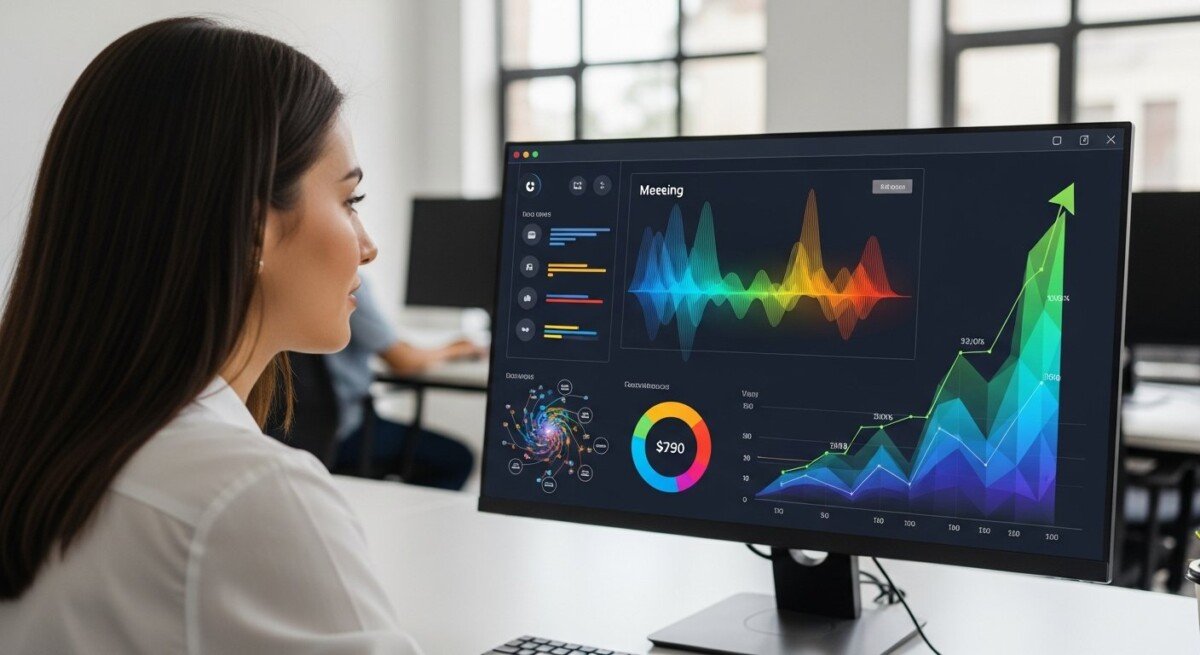
Real-Time Call Analytics: Transforming Conversations Into Revenue
Real-time call analytics provides immediate insight into customer conversations, allowing businesses to optimize marketing and coach agents while calls are still active.

By Nikolai Evercrest
Imagine a sales call is happening right now. The prospect is asking detailed questions, the agent is explaining a complex service, and the conversation is flowing. But what if you could see the value of that call, its sentiment, and its likely outcome, not in a week, but as it unfolds? This is the power of real-time call analytics, a technology that moves beyond simple call logging to provide immediate, actionable intelligence from every customer conversation. In today’s fast-paced business environment, waiting for end-of-day or end-of-week reports means missing critical opportunities to coach agents, capture leads, and optimize marketing spend on the fly. Real-time analytics turn voice interactions into a live data stream, empowering businesses to act with unprecedented speed and precision.
What Real-Time Call Analytics Actually Measures
Real-time call analytics is more than just seeing that a call is active. It is the instantaneous processing and presentation of key conversational data points. This goes far beyond traditional metrics like call duration and time of day. Modern platforms use advanced speech analytics, natural language processing (NLP), and artificial intelligence (AI) to listen to and interpret the content and context of calls as they happen. The goal is to surface insights that directly impact revenue, customer satisfaction, and operational efficiency while the conversation is still relevant and actionable.
The core measurements fall into several interconnected categories. First, there is performance and compliance tracking. This involves monitoring for specific keywords or phrases, such as mandatory disclosures in regulated industries or competitive mentions. Second, sentiment analysis gauges the emotional tone of both the agent and the customer, alerting supervisors to rising frustration or notable satisfaction. Third, conversation intelligence identifies specific moments, like a price objection, a request for information, or a buying signal. Finally, these systems tie directly to attribution, matching the inbound call to the specific marketing source, keyword, or ad campaign that generated it, all in real time.
The Tangible Business Benefits of Immediate Insight
The shift from historical reporting to live analysis creates a paradigm shift in how businesses operate. The primary benefit is the dramatic acceleration of the feedback loop. Instead of identifying a problem with a marketing campaign or a sales script days after it has cost thousands of dollars, you can see its impact within minutes and pivot immediately. This real-time optimization applies across departments, from marketing and sales to customer service and operations.
For sales teams, real-time analytics act as a live coach. Supervisors can receive alerts when a call hits a predefined trigger, such as a prolonged silence, a competitor’s name, or a customer expressing confusion. This allows for immediate, discreet intervention or whispering suggestions to the agent. For marketers, the ability to see which campaigns are generating high-value calls versus low-intent inquiries at this very moment enables dynamic budget reallocation. The financial impact is direct: higher conversion rates, lower cost per acquisition, and improved return on ad spend (ROAS).
Consider these specific outcomes enabled by real-time call analytics:
- Instant Lead Scoring and Routing: Analyze caller intent and sentiment during the call to score the lead and route it to the most qualified agent or department before the call ends.
- Dynamic Script Guidance: Provide agents with on-screen prompts and next-best-action suggestions based on live conversation analysis, improving adherence and outcomes.
- Proactive Compliance Assurance: Flag potential compliance issues in real time, allowing for immediate correction and significantly reducing regulatory risk.
- Campaign Performance Dashboards: View marketing channel performance with live call data overlays, showing not just clicks but valuable conversations as they happen.
- Enhanced Customer Experience: Identify frustrated callers in real time and escalate the call to a specialist before the customer hangs up dissatisfied.
The cumulative effect is a more agile, responsive, and customer-centric organization. Data ceases to be a rear-view mirror and becomes a navigational instrument for the present moment.
Key Features of a Robust Real-Time Analytics Platform
Not all call analytics solutions offer true real-time capabilities. A robust platform designed for immediate insight will integrate several core features. The foundation is high-quality call tracking that captures every call and attributes it accurately to its source. This data must then be processed by powerful speech-to-text engines that transcribe conversations with low latency. The real magic happens in the analytics layer, where AI models scan the transcript for patterns, keywords, sentiment, and custom-defined topics.
A critical feature is a customizable alerting and notification system. Users should be able to set rules that trigger alerts via SMS, email, or within a dashboard. For example, an alert could be set for any call containing the phrase “cancel my service” with a negative sentiment score. Another essential component is a live dashboard that visualizes key performance indicators (KPIs) as they update. This dashboard should be filterable by team, campaign, geographic location, or other dimensions to provide context.
Finally, integration capabilities are non-negotiable. The value of real-time call data multiplies when it can flow seamlessly into other business systems. This includes Customer Relationship Management (CRM) platforms like Salesforce, where call outcomes and transcripts can automatically populate lead records. It also includes marketing platforms like Google Ads, enabling the pausing of underperforming keywords the moment they generate poor-quality calls, and communication tools like Slack for team alerts.
Implementing Real-Time Analytics: A Strategic Process
Adopting real-time call analytics is a strategic initiative that requires careful planning to maximize its return. The process begins with a clear definition of business objectives. Are you aiming to increase sales conversion, improve customer satisfaction scores, reduce compliance violations, or optimize marketing spend? Your goals will dictate which features and metrics you prioritize.
The next step is integration and data unification. This involves connecting your call analytics platform with your existing phone system (PBX, VoIP), marketing tools, and CRM. Clean, unified data is the fuel for accurate real-time analysis. Following integration, the most crucial phase is rule and alert configuration. This is where you translate your business objectives into the system’s logic. Work with team leaders from sales, marketing, and customer service to identify the key conversational moments that matter. For a sales team, that might be an alert for a buying signal like “what are the next steps?” For customer service, it might be a spike in caller frustration.
Finally, success hinges on training and change management. Agents and managers need to understand how the system works, how the data will be used for coaching and improvement, and not for punitive measures. Establishing a culture of data-driven coaching is essential. The implementation is not a one-time event but an iterative process of refining rules, alerts, and dashboards based on outcomes.
Frequently Asked Questions
How is real-time analytics different from traditional call reporting?
Traditional call reporting is historical and aggregate. It tells you what happened yesterday or last week, like total call volume or average handle time. Real-time analytics is live and granular. It tells you what is happening right now on a specific call, like the sentiment of the conversation or if a key compliance phrase was missed, enabling immediate action.
Is real-time call analytics legal and compliant with recording laws?
Compliance is paramount. Laws regarding call recording and monitoring, such as two-party consent laws in certain states, still apply. A reputable platform will provide tools to manage compliance, such as automated announcements and mechanisms for obtaining consent. It is the business’s responsibility to configure and use the technology in accordance with all applicable federal, state, and industry regulations.
Can small businesses benefit from this technology, or is it for enterprises only?
While early versions were enterprise-focused, the technology has become far more accessible. Many software-as-a-service (SaaS) call analytics platforms offer scalable, subscription-based pricing with real-time features. For a small business where every call is critical, the ability to instantly identify and respond to a high-value lead or a dissatisfied customer can provide a significant competitive advantage.
Does real-time analysis require someone to constantly monitor a screen?
No, that is the key advantage of automated alerts. While live dashboards are available for supervisors, the system is designed to work autonomously. You configure smart alerts for specific, high-priority scenarios. Instead of watching hundreds of calls, a manager receives a targeted notification only when a predefined important event occurs, allowing them to manage by exception.
How accurate is the speech-to-text and sentiment analysis?
Accuracy has improved dramatically with advances in AI and machine learning, especially for clear audio in common languages. Top platforms boast very high accuracy rates. However, factors like poor connection, strong accents, or background noise can affect it. The best practice is to start with broader, more forgiving rules and refine them as you review the system’s performance with your specific call data.
The transition to real-time call analytics represents a fundamental upgrade in business intelligence. It closes the gap between customer interaction and organizational response, creating a dynamic loop of insight and improvement. By transforming conversations into immediately actionable data, businesses can enhance every touchpoint, empower their teams with live context, and ultimately drive more revenue from their most valuable marketing channel: the phone call. The future of customer communication is not just recorded, it is understood and acted upon in the moment.